What is BMI and Why it’s Important
The first step to losing weight is to have a vision, a strategy, and tactics to accomplish the goal. What is or should your goal weight be? You may not know what your ideal weight is, but it’s important to know where you’re going if you want to get there. We will discuss what BMI and body composition are, why they are important, and what is a healthy weight based on BMI (body mass index).

Education and Understanding BMI
STEP 1: Determine your current BMI
- BMI Calculator
- Body Fat Percentage
- Waist to Height Ratio

Where are you and where do you need to go?
STEP 2: Find your goal weight, target BMI or Body Fat %

Implement the plan
STEP 3: Enjoy the journey. The plan will change as you go!
GETTING STARTED – What is BMI and Why is it Important?
BMI stands for Body Mass Index, which is a measure of body fat based on a person’s weight and height. It is calculated by dividing a person’s weight in kilograms by the square of their height in meters (BMI = weight (kg) / height (m)^2). BMI is commonly used as a screening tool to determine if a person is underweight, overweight, or within a healthy range.
The healthy BMI range for adults is generally considered to be between 18.5 and 24.9. However, the healthy BMI range can vary slightly depending on a person’s sex, age, and ethnicity. Generally speaking, healthy BMI ranges are the same for both men and women.
BMI is an imperfect measure of health, as it does not account for differences in body composition (the ratio of muscle to fat) but is a guide. For example, an athlete with a high muscle mass may have a higher BMI, but a low body fat percentage, while someone who is sedentary and a high body fat percentage may have a normal BMI.
Body fat percentage – A more accurate measure of body composition and health than BMI, as it takes into account body fat relative to total body weight. Body fat percentage can be measured using a variety of methods, such as skin fold calipers, bio-electrical impedance, and dual-energy x-ray absorptiometry (DEXA). However, these methods can be more expensive and time-consuming than measuring BMI. BMI is a great starting place and rule of thumb to use as a guide on your weight loss journey.
Step 1: Calculate your BMI
BMI calculator
ft
in
lbs
If your BMI is outside of the healthy range, use the chart below to see where you should be for your height. You can also adjust the calculator to find where your goal weight is on the BMI scale. This can give you a good idea if you need to adjust your goal. If you have more to lose than you thought, don’t get discouraged this is only a guide.
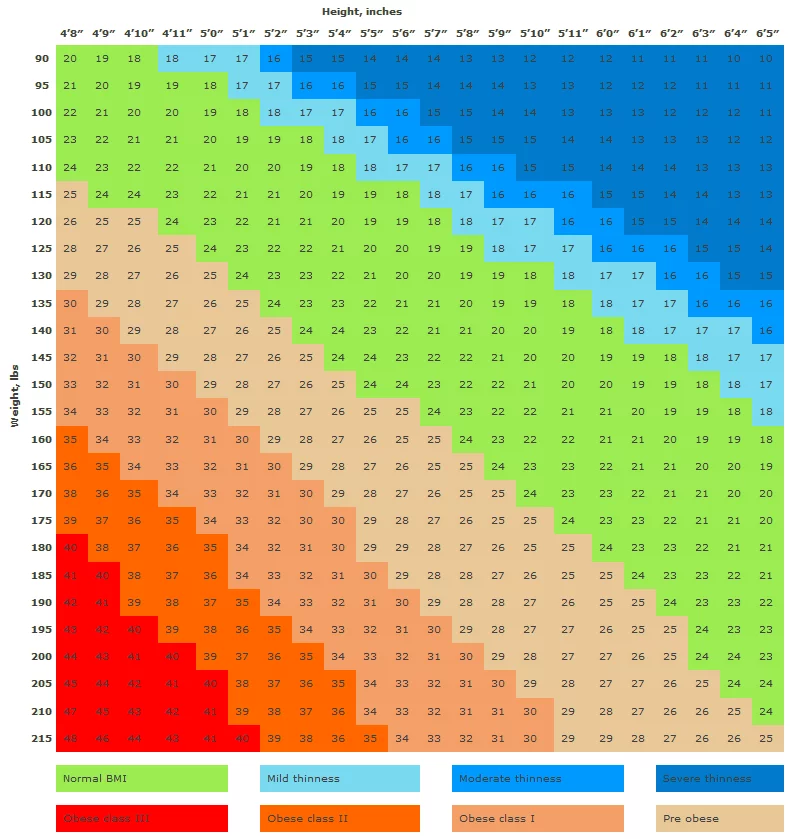
Consequences of a BMI outside the healthy range?
Having a BMI outside the healthy range (18.5-24.9) can have negative consequences on a person’s health. Here are some potential consequences:
- Underweight (BMI < 18.5): People who are underweight may have a weakened immune system, increased risk of infections, decreased bone density, and fertility problems.
- Overweight and Obesity (BMI > 24.9): People who are overweight or obese are at increased risk for a variety of health problems, including:
- Cardiovascular disease: High BMI can increase the risk of developing heart disease, stroke, high blood pressure, and high cholesterol levels.
- Diabetes: High BMI is a major risk factor for developing type 2 diabetes.
- Respiratory problems: Excess weight can make it harder to breathe and increase the risk of developing sleep apnea and asthma.
- Joint problems: High BMI can put extra stress on joints, leading to joint pain and arthritis.
- Cancer: High BMI has been linked to an increased risk of developing certain types of cancer, such as breast, colon, and pancreatic cancer.
- Mental health issues: People with high BMI may be at increased risk for depression, anxiety, and other mental health problems.
It’s important to note that BMI is just one measure of health, and it doesn’t take into account factors such as muscle mass or body composition. Therefore, it’s best to consult with a healthcare professional to determine an individualized healthy weight range and lifestyle plan. When you are ready we can have an in depth conversation with you as it relates to BMI and body composition.
Step 2: Now for a more in depth look at Body Composition. Healthy Body Fat Percentages –
Healthy body fat percentage ranges for men and women vary based on a few factors such as age, fitness level, and genetics. However, here are some general guidelines for healthy body fat percentage ranges:
For men:
- Essential fat: 2-5%
- Athletes: 6-13%
- Fitness enthusiasts: 14-17%
- Healthy range: 18-24%
- Overweight: 25-29%
- Obese: 30% or higher
For women:
- Essential fat: 10-13%
- Athletes: 14-20%
- Fitness enthusiasts: 21-24%
- Healthy range: 25-31%
- Overweight: 32-39%
- Obese: 40% or higher
It’s important to note that having a body fat percentage above or below these ranges doesn’t necessarily mean that a person is unhealthy. Additionally, the methods used to measure body fat can also affect the accuracy of the results. Therefore, it’s best to consult with a healthcare professional to determine an individualized healthy body fat percentage range.
What do you mean when you say essential fat?
Essential fat is the minimum amount of body fat that is necessary for basic physical and physiological health. It is called “essential” because it is required for normal physiological functions, such as maintaining healthy skin and hair, insulation, and cushioning organs.
The essential fat percentage differs between men and women, as women require a higher percentage of essential fat due to their reproductive functions. For men, the essential fat percentage is typically around 2-5% of total body weight, while for women, it is typically around 10-13% of total body weight.
It’s important to note that having a body fat percentage below the essential fat range can be dangerous and can lead to serious health problems. Therefore, it’s recommended that individuals maintain a healthy body fat percentage within the healthy range for their gender and age group.
Waist to height ratio – A simple guide to health
The waist-to-height ratio (WHtR) is a measure of the distribution of body fat that has been shown to be a good indicator of cardiovascular risk. It is calculated by dividing the waist circumference by height.
A WHtR of less than 0.5 is generally considered healthy for both men and women, as it indicates that the individual has a low risk of developing cardiovascular disease and other health problems associated with excess body fat.
For example, if a person’s waist circumference is 32 inches and their height is 5 feet 6 inches (66 inches), their WHtR would be calculated as follows:
32 inches / 66 inches = 0.48
This WHtR would be considered healthy, as it is less than 0.5.
However, it’s important to note that WHtR should not be used as a sole indicator of health, and should be used in conjunction with other measures such as BMI, body fat percentage, and overall lifestyle factors such as nutrition and exercise.
A more in depth look at body composition – In-Body scan.
The In-Body scan is a body composition scanner. It allows you to track your body composition progress throughout your transformation. This is much more powerful than a scale, we can track not only the weight you lose, but what that weight consists of, as well as your lean muscle versus body fat percentage. We will do this every six to eight weeks and will help us with adjustments to your program. You can do this at NoCo Fitness in Greeley anytime they are open and staffed. The cost is $10. They are located at: 3820 W 10th St Suite B-10, Greeley, CO 80634 or at any facility that has an In-Body machine.
Resources?
Put more Patient Resources HERE!
RECIPES
EXERCISE AND RESISTANCE TRAINING